

Slater-Marietta is a small unincorporated community in northern Greenville County, tucked up near the Blue Ridge foothills where the landscape starts to roll and the tree canopy stays thick year-round. It’s the kind of place where neighbors know each other and word travels fast, including word about which service companies actually show up and do the job right.
Home Service Nerds HVAC, AC & Furnace Repair serves Slater-Marietta as part of our commitment to the full Upstate South Carolina region. We’re a veteran-owned, family-operated team that brings precision, honesty, and real accountability to every call we take. We explain what we find before we touch anything, we fix it correctly the first time, and if we ever fall short of that, we come back at no extra charge until it’s right.
Slater-Marietta’s position near the Blue Ridge escarpment gives it a slightly different climate profile than communities further south in the Greenville metro. Afternoon moisture from the mountains pushes humidity levels higher here, and the dense tree coverage that makes the area so appealing also means outdoor AC units frequently deal with leaf debris, pollen accumulation, and reduced airflow around the condenser. Those conditions combine to create a unique strain pattern on residential cooling equipment that rewards attentive maintenance and quick repair response.
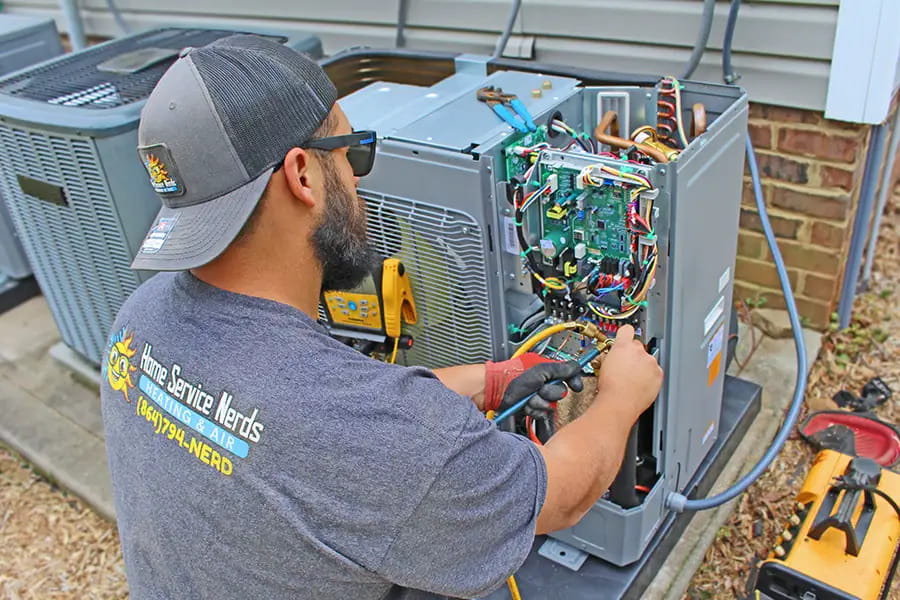
Our repair services are designed to address the full scope of what goes wrong when a system is working hard in a humid, heavily vegetated environment. We diagnose refrigerant issues, test and replace failed electrical components, clean coils that have been compromised by outdoor debris, clear condensate drainage systems, and verify that every part of the system is performing within proper operating range. We do not close out a job until we have confirmed the system is cooling the home the way it should and the homeowner understands exactly what we did and why.
Even in a community as close-knit as Slater-Marietta, it can be easy to write off early AC warning signs as just a rough summer day. These are the signals that mean something more is going on.
In Slater-Marietta’s warm and often muggy summers, catching these early makes a significant difference in repair complexity and cost.
The tree coverage that defines Slater-Marietta’s character is one of the biggest contributors to AC problems in the area. Outdoor condenser units positioned near large hardwoods and pines accumulate leaf litter, seed pods, and pollen against the coil fins at a rate that surprises most homeowners. That debris restricts airflow through the condenser, which causes refrigerant pressures to climb and the compressor to work against greater resistance. Left unaddressed over a full cooling season, restricted condenser airflow is one of the most common paths to compressor failure.
The community’s elevation and proximity to the foothills also means it receives more rainfall than lower-lying Upstate communities, which keeps ground moisture and ambient humidity elevated throughout the summer. That sustained moisture accelerates condensate drain line buildup, making clogs more frequent and system-triggered safety shutoffs more likely for homeowners who have not had the drain serviced recently. Older homes in the Slater-Marietta area, some of which were built during the mid-20th century textile era, may also have ductwork that has never been properly sealed or evaluated, quietly bleeding conditioned air and driving up cooling costs with each passing season.
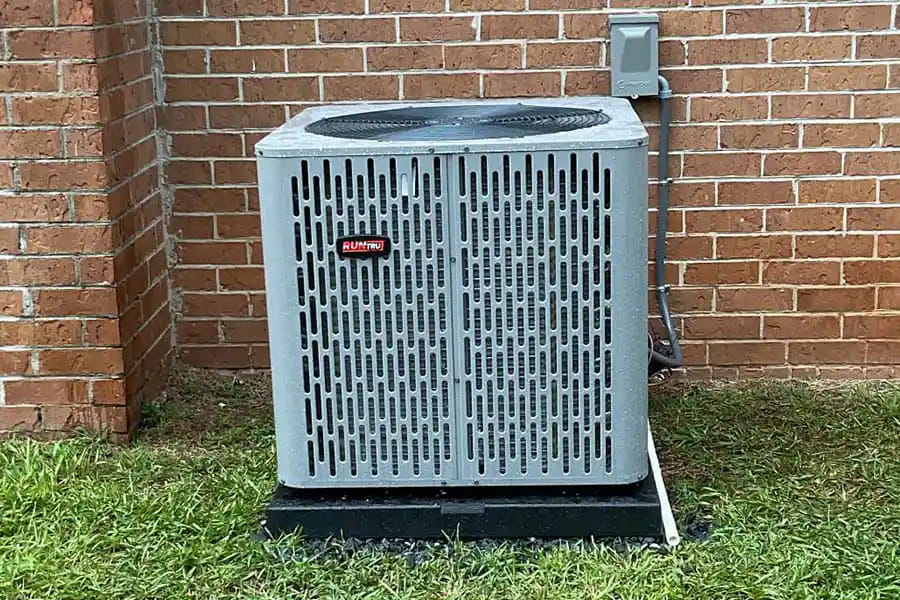
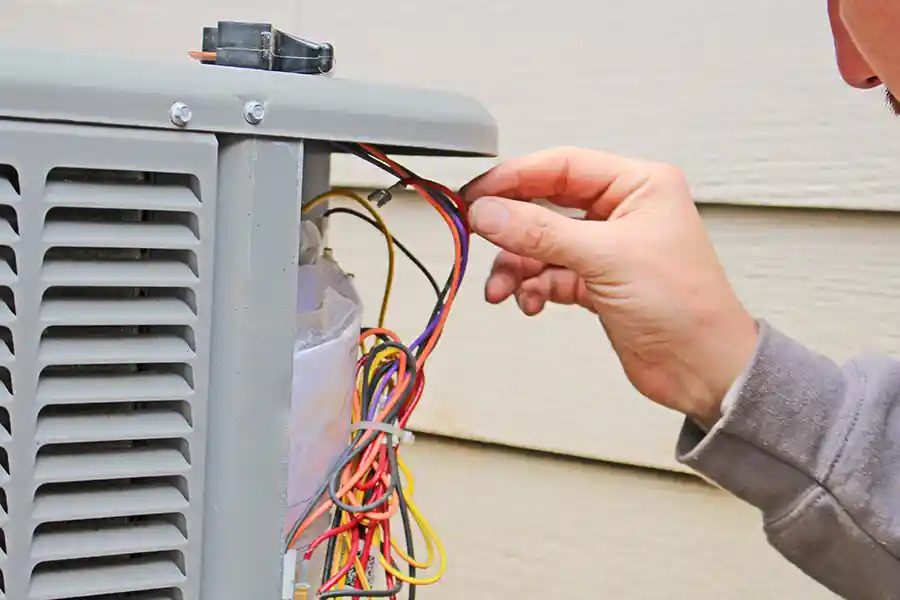
Connie called us in late June after her system had been running around the clock for two days without her house dropping below 83 degrees. She lives in a modest older home in Slater-Marietta, surrounded by the kind of tall oaks and pines that give the community its character, and she had noticed the outdoor unit sounding louder than usual for the past few weeks.
When our technician arrived, it was immediately clear the condenser coil was in rough shape. Layers of seed pods, pine needles, and compacted pollen had nearly sealed off airflow through the coil fins on two sides of the unit. The compressor was running hot and the high-side pressure was well above normal operating range. We shut the system down, carefully cleaned the coil using the appropriate technique for the fin density, and allowed pressures to normalize before restarting. Once running again, we confirmed the refrigerant charge was within spec and tested the capacitor, which was weakening but had not yet failed. We replaced it while we were there to save Connie a second call later in the summer. She appreciated that we caught it rather than waiting for it to become an emergency. That kind of attention to the full picture is just how we approach every job.
In a small community like Slater-Marietta, a service company either earns its reputation or it doesn’t last. We take that reality seriously, and it shows in how we conduct every call we accept in this part of Greenville County.
Slater-Marietta deserves a company that treats it like the community it is, not just another stop on a route. That is the standard we hold ourselves to every time we come out here.
Yes. We serve the full Slater-Marietta community including homes on rural routes and properties set back from main roads throughout northern Greenville County. Distance from the main corridors does not affect the quality or thoroughness of the service we provide.
Trees drop leaves, seed pods, pollen, and other debris that pack against the condenser coil fins and restrict the airflow the unit needs to release heat. When that airflow is compromised, refrigerant pressures climb and the compressor works harder than it should. In heavily wooded areas like Slater-Marietta, clearing debris from around the outdoor unit and having the coil cleaned annually is especially important.
The most common signs are water pooling near the indoor air handler, a musty smell coming from the vents, or the system shutting off unexpectedly. Many systems have a float switch that cuts power to the unit when water backs up in the drain pan to prevent overflow. If your system stops running for no obvious reason, a clogged drain line is one of the first things worth checking.
It depends on the age of the system, the nature of the repair, and how the equipment has been maintained. For systems over 12 to 15 years old facing a significant repair, replacement often makes more long-term financial sense, particularly since newer equipment handles humidity more efficiently. We will walk you through an honest comparison of both paths before you make a decision.
At least once a year, ideally in the spring before cooling season begins. In a heavily wooded environment, some homes may benefit from a mid-season check as well, particularly if large trees are nearby and debris accumulation is noticeable. A clean condenser coil is one of the single most effective ways to keep your system running efficiently and extend compressor life.