

Taylors is one of Greenville County’s most established unincorporated communities, sitting just northeast of the city of Greenville along the US-29 corridor. It’s a place with deep roots, mature neighborhoods, and a housing stock that reflects decades of Upstate growth. From mid-century ranches near the old textile mill sites to newer infill development closer to the Greer border, the homes here are as diverse as the people who live in them.
Home Service Nerds HVAC, AC & Furnace Repair serves Taylors as one of our core Upstate communities. We’re a veteran-owned, family-operated team that takes pride in doing things right, communicating honestly, and never leaving a homeowner guessing about the condition of their equipment. Every repair we make is backed by a simple guarantee: if it’s not right, we come back and make it right at no extra charge.
Taylors sits at an elevation that brings slightly more variable weather than communities further south in the Greenville metro, including afternoon thunderstorms that roll through from the foothills with regularity during summer months. Those storms bring voltage fluctuations that stress sensitive HVAC electrical components, and the moisture they deposit keeps ambient humidity elevated for hours after the rain passes. A system that was already working hard on a hot afternoon gets pushed harder still by that combination of heat, humidity, and electrical instability.
Our repair services are built to handle the full range of problems that develop under those conditions. We diagnose and correct refrigerant issues, failed or weakening capacitors and contactors, evaporator and condenser coil problems, condensate drain blockages, blower motor failures, and thermostat and control board faults. We test the complete system rather than isolating the single component that triggered the call, because in a climate like Taylors, one failing part is often a sign that others are under stress as well. Every finding gets communicated clearly and every repair gets your approval before we begin.


Taylors summers run long and the humidity makes every degree of lost cooling feel worse than it would in a drier climate. These are the warning signs that mean it is time to call a technician.
Taylors homeowners who catch these signs early almost always face a simpler and less expensive repair than those who wait until the system stops working entirely.
The age of Taylors’ housing stock is one of the most significant factors shaping the AC problems we see in this community. Many of the ranch-style and split-level homes built here during the 1960s through 1980s have ductwork that was designed for a different era of HVAC equipment, and those systems have been patched, extended, and modified over the decades in ways that can restrict airflow and create pressure imbalances throughout the home. A system fighting unbalanced ductwork runs longer cycles, uses more energy, and wears out faster than one with a properly configured distribution system.
The summer storm pattern that moves through Taylors from the foothills is another consistent source of AC trouble. Lightning strikes and the power surges that follow them are a leading cause of capacitor and control board failures in this area, often happening suddenly and without prior warning signs. Beyond electrical damage, the sustained humidity that follows summer rain events keeps condensate drain lines working overtime, and lines that have not been maintained regularly back up and trigger safety float switches that shut the system down entirely. For homeowners in Taylors, those two factors together, storm-related electrical damage and humidity-driven drain issues, account for a significant share of the repair calls we receive each season.

Phillip called us on a Friday afternoon in early August. He lives in a well-kept ranch home in a mature neighborhood off Wade Hampton Boulevard, and his AC had stopped cooling the previous evening after a strong storm moved through the area. With temperatures forecast to stay in the mid-90s through the weekend, getting someone out that day was important to him.
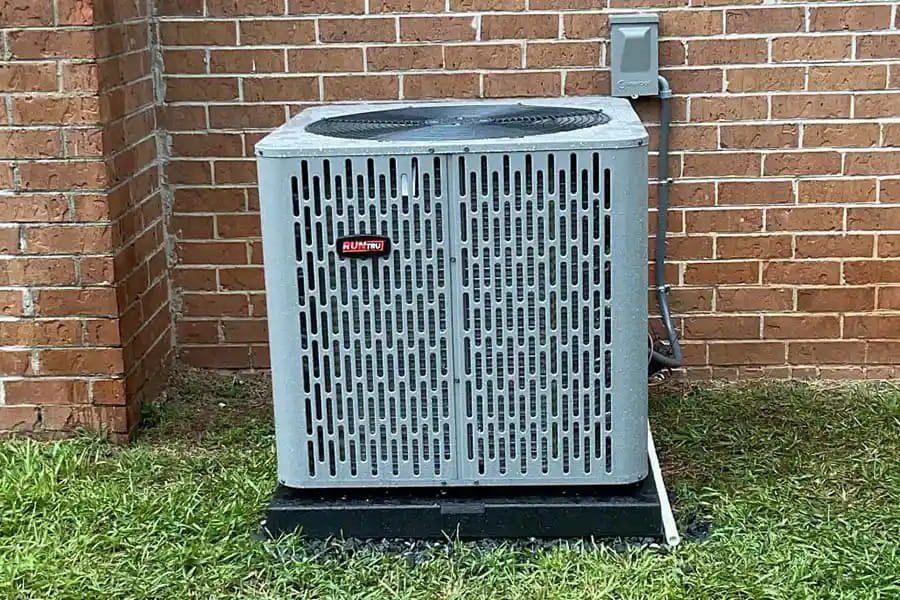
When our technician arrived, the outdoor unit was completely non-responsive. A quick electrical check pointed to the capacitor, which had failed, almost certainly from a voltage spike during the previous night’s storm. We replaced the capacitor and the system came back online, but before we wrapped up we ran a full check of the equipment given the storm as the likely cause. The contactor showed pitting consistent with electrical stress, and while it had not yet failed, it was weakened enough that we recommended replacing it at the same visit to avoid a second call in the near future. Phillip appreciated the straightforward explanation and the option to address it while we were already there. The system ran cleanly through the rest of the summer. That kind of thorough follow-through on a simple call is exactly what separates a good repair from a great one.
Taylors is the kind of community where people pay attention to which companies do right by their neighbors and which ones don’t. We built Home Service Nerds HVAC around the values that hold up in communities like this one, and we work every day to make sure our reputation here reflects them.
Taylors has been home to generations of Upstate families, and it deserves an HVAC company that shows up with that same sense of commitment and care.
Yes. We serve the full Taylors community including established neighborhoods along Wade Hampton Boulevard, areas near the Greer border, and residential streets throughout the unincorporated parts of northeastern Greenville County. No part of Taylors is outside our service area.
Yes. Voltage spikes from nearby lightning strikes or grid fluctuations during a storm can damage capacitors, contactors, and control boards in your HVAC system. If your AC stopped working after a storm or a power event, electrical component damage is a likely cause and worth having a technician check before assuming a mechanical failure.
A properly functioning AC removes both heat and moisture from indoor air. If your home still feels muggy with the system running, it may be low on refrigerant, have a coil issue that is reducing moisture removal capacity, or be oversized for the home, which causes it to short-cycle and shut off before completing the dehumidification part of the cooling process. A technician can identify which factor is at work.
Older homes in Taylors often have ductwork that was designed for earlier HVAC equipment and has been modified over the decades in ways that create airflow imbalances and energy losses. Gaps, disconnections, and under-insulated runs through crawl spaces and attics allow conditioned air to escape before it reaches living areas. A duct evaluation can reveal whether the distribution system is contributing to comfort and efficiency problems.
Spring, before the cooling season begins, is the ideal time. Getting a tune-up in March or April means your system has been inspected, cleaned, and confirmed to be operating correctly before the first stretch of summer heat arrives. In Taylors, where summer storms can stress electrical components and sustained humidity strains drain systems, going into the season with a clean bill of health makes a real difference in how reliably the system performs through August.