

Powdersville has become one of the fastest-growing communities in Anderson County, and it’s easy to see why. Its location between Greenville and Anderson along the I-85 corridor makes it a natural choice for families who want space, newer construction, and easy access to everything the Upstate has to offer. But that rapid growth also means a lot of new HVAC systems that need to be maintained correctly, and older homes on the edges of the community that have been running the same equipment for years.
Home Service Nerds HVAC, AC & Furnace Repair serves Powdersville and the surrounding area as part of our core Upstate territory. We’re a veteran-owned, family-operated team rooted near Greenville, and we take real pride in how we serve the communities around us. Every call gets our full attention, every homeowner gets a straight answer, and every repair gets done right the first time or we come back and fix it at no extra charge.
Powdersville’s growth has brought with it a housing landscape that spans a wide range of system ages and installation quality. Subdivisions that went up quickly during the mid-2000s building boom sometimes have systems that were installed to meet minimum requirements rather than optimal performance standards. A decade or two of Upstate summers later, those systems are reaching the age where components start to wear out in sequence, and homeowners begin to notice their cooling costs creeping up even as comfort goes down.
We approach every repair call with a full-system mindset. Rather than replacing the single part that failed and walking out the door, we assess the overall condition of the equipment, check refrigerant charge, test capacitors and contactors, evaluate coil cleanliness, and verify that airflow is moving correctly through the home. That process gives us a complete picture of what’s going on so we can fix what’s broken today and flag anything that may become a problem before the next cooling season. You get transparency at every step, and no repair begins until you understand and approve what we’ve found.
Powdersville summers are long, and a cooling system that is starting to fail will make that length feel even longer. These are the signs that point to a system in need of professional attention.
Powdersville’s combination of heat and humidity means these issues tend to escalate quickly. Getting a technician out early almost always leads to a simpler, less expensive fix.
One pattern we see consistently in Powdersville’s newer subdivisions is systems that were sized based on square footage alone without accounting for the orientation of the home, the amount of window exposure, or the quality of attic insulation. A system that is slightly undersized for its actual load will run longer cycles, accumulate wear faster, and struggle to maintain consistent temperatures on the hottest days. Over time that mismatch shows up as premature component failure and rising energy costs.
The community’s location in a transitional zone between Anderson and Greenville counties also means it catches a significant share of summer storm activity, including lightning and power fluctuations that can damage sensitive electrical components in HVAC equipment. Capacitors and control boards are particularly vulnerable to voltage spikes, and they tend to fail suddenly rather than gradually. Condensate drain issues are another recurring theme here, as the combination of high summer humidity and systems running long hours generates more condensate volume than homeowners typically expect, and drain lines that aren’t maintained regularly back up and trigger safety shutoffs.
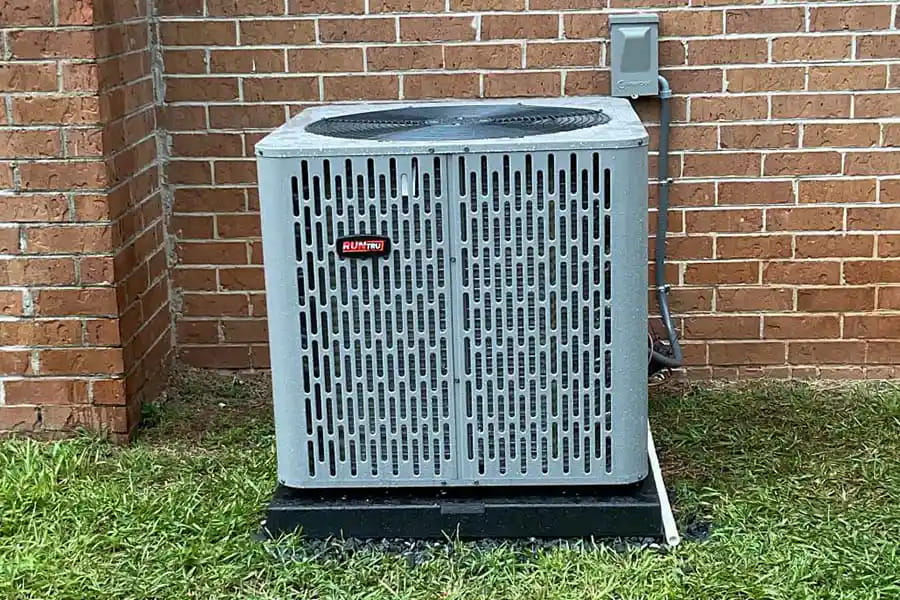
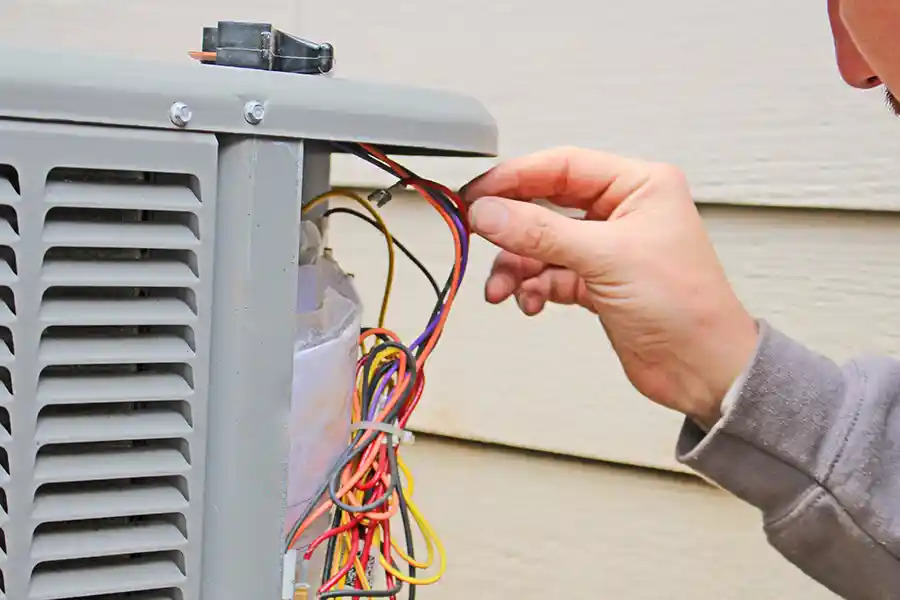
Greg called on a Tuesday morning in July after his system had stopped cooling overnight. He lives in a subdivision off Powdersville Road that went up in the mid-2000s, and the original HVAC equipment was still in place. The house was already climbing past 80 degrees by the time our technician arrived.
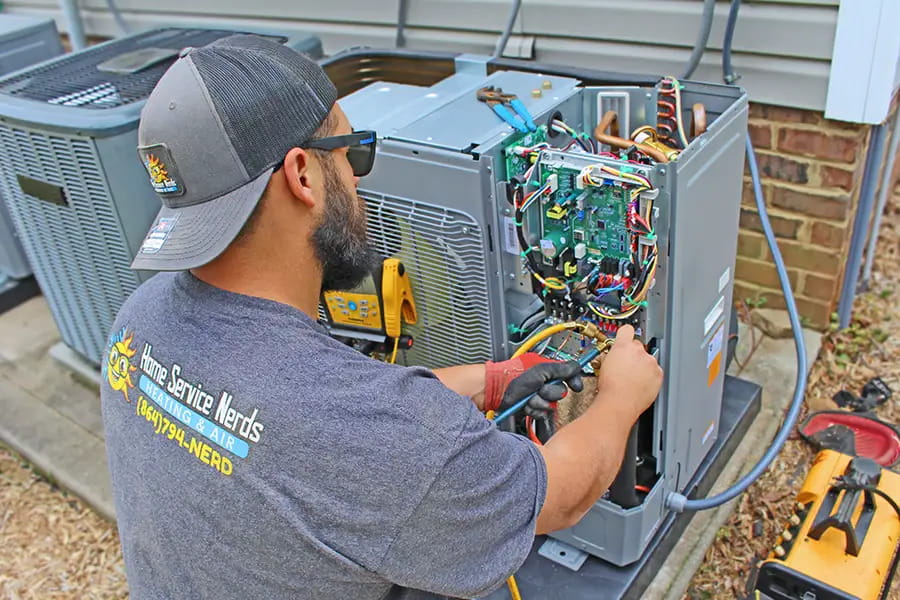
The outdoor unit was completely silent, which pointed right away to an electrical issue rather than a refrigerant problem. A quick test of the capacitor confirmed it had failed, which was preventing the compressor and fan motor from starting. We replaced the capacitor and the system came back online, but before we packed up we ran a full check of the equipment given its age. The refrigerant charge was a few ounces low, which we topped off, and the evaporator coil had a layer of buildup that was beginning to restrict airflow. We cleaned it on the spot and noted the condition of the contactor, which was pitted and close to the end of its service life. Greg appreciated the full picture. He left the call knowing exactly where his system stood, not just that we had swapped one part and gone. That kind of honesty is what we’d want if it were our own home.
There are a lot of HVAC companies working the I-85 corridor, and Powdersville homeowners have plenty of options. What we offer isn’t a lower price or a faster truck; it’s a different standard of service built around honesty, precision, and accountability.
Powdersville is growing, and we intend to grow with it as the HVAC company this community can count on for the long haul.
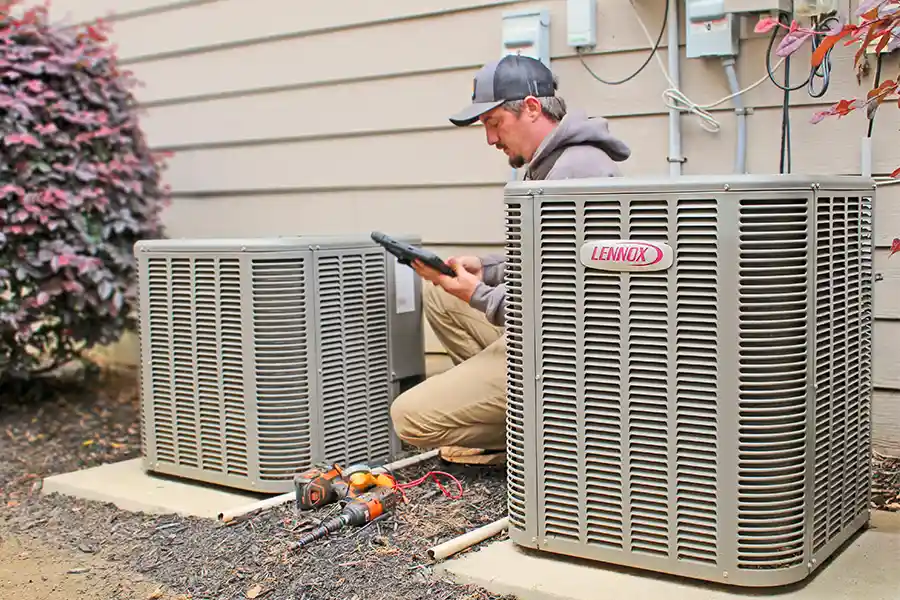
Most residential repairs are completed in a single visit ranging from one to three hours. More complex issues or situations where parts need to be sourced may require a follow-up, but we communicate clearly about timing before we start and keep you updated throughout the process.
Yes. Voltage spikes from lightning strikes or grid fluctuations can damage capacitors, control boards, and other sensitive electrical components in your HVAC system. If your AC stopped working after a storm or a power event, that is a likely cause worth having a technician check before assuming a more serious mechanical failure.
At 15 years, a system is approaching the end of its typical service life, especially in a high-demand climate like Powdersville’s. Whether repair or replacement makes more sense depends on the cost of the needed fix, the overall condition of the equipment, and how efficiently the system has been running. We will give you an honest comparison of both options so you can make the right decision for your home and budget.
Uneven cooling in newer homes is often tied to how the system was sized and how the ductwork was designed and installed. Homes built quickly during high-growth periods sometimes have duct runs that are not balanced for the actual layout of the house. A technician can assess airflow at each register and identify where the imbalance is coming from.
Sustained high humidity means your system generates more condensate volume over the course of a cooling season, which accelerates drain line buildup and increases the frequency of clogs. It also keeps the system running longer cycles as it works to remove moisture alongside heat, which adds wear to compressors and motors over time. Annual maintenance that includes coil cleaning and drain line treatment is one of the best ways to offset that wear.