

Tigerville is a small rural community tucked into the northern corner of Greenville County, sitting close to the base of the Blue Ridge Mountains where the landscape turns rugged and the tree canopy runs thick. It’s the kind of place where properties are spread out, neighbors look out for one another, and the character of the community has stayed largely intact even as the broader Upstate region has grown up around it.
Home Service Nerds HVAC, AC & Furnace Repair serves Tigerville and the surrounding foothills area as part of our commitment to the full Upstate South Carolina community. We’re a veteran-owned, family-operated team that runs every call the same way regardless of the size of the town or the distance from the highway. We show up when we say we will, explain what we find in plain language, and fix it right the first time. If that ever falls short, we come back at no extra charge until it’s right.
Living near the Blue Ridge foothills means Tigerville experiences weather patterns that differ meaningfully from communities further south in the Upstate. Afternoon moisture off the mountains pushes humidity into the area consistently through summer, and the elevation swings between Tigerville and the valleys below create microclimatic conditions where fog, heavy dew, and overnight moisture are more common than residents of lower-lying communities experience. All of that ambient moisture finds its way into HVAC systems through condensate systems, coil surfaces, and ductwork in ways that accelerate biological growth and drain line blockages.
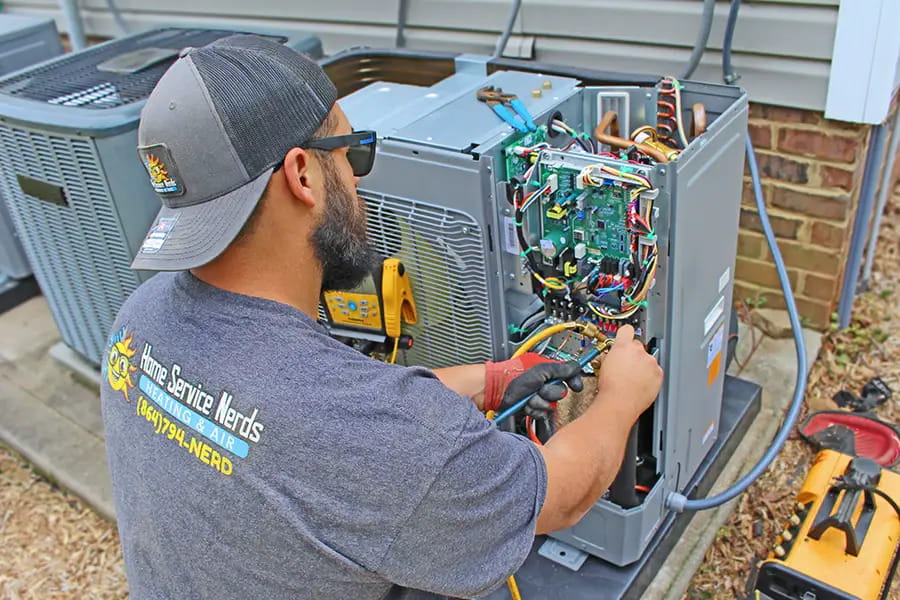
Our repair services address the specific failure patterns that emerge in homes operating in this kind of environment. We service the full refrigerant circuit, test and replace electrical components, clean coils that have been compromised by organic debris and pollen from the surrounding forest canopy, clear and treat condensate drain lines, and verify airflow balance throughout the home. We do not consider a job complete until the system is performing correctly and the homeowner has a clear picture of what we found and what we corrected.
Tigerville’s warm, humid summers may be milder than the deep Upstate heat, but a struggling AC in this environment still makes home life uncomfortable fast. These are the signs worth paying attention to.
In a rural community like Tigerville where service providers are not around every corner, catching these signs early and calling promptly makes a meaningful difference in how quickly and simply the problem gets resolved.
The forested environment surrounding Tigerville creates maintenance demands that are easy to underestimate. Outdoor condenser units on properties bordered by mature hardwoods and pines accumulate leaf litter, seed pods, pine needles, and pollen at a rate that can fully restrict coil airflow within a single season if the unit is not cleaned annually. When condenser airflow is compromised, the compressor works against elevated pressure and heat, wearing components faster and increasing the risk of a mid-summer failure.
Tigerville’s elevation and the moisture patterns that come with proximity to the mountains also mean that condensate drain lines here deal with more biological growth than systems in drier, more urban environments. Algae and organic matter accumulate faster in the consistently humid conditions near the foothills, and drain line clogs that trigger safety shutoffs are among the most frequent service calls we receive in this part of Greenville County. Older homes on larger rural lots, some of which were built with minimal insulation standards, also tend to have ductwork running through unconditioned spaces that bleed conditioned air before it ever reaches living areas, making the system work harder than the thermostat setting alone would require.
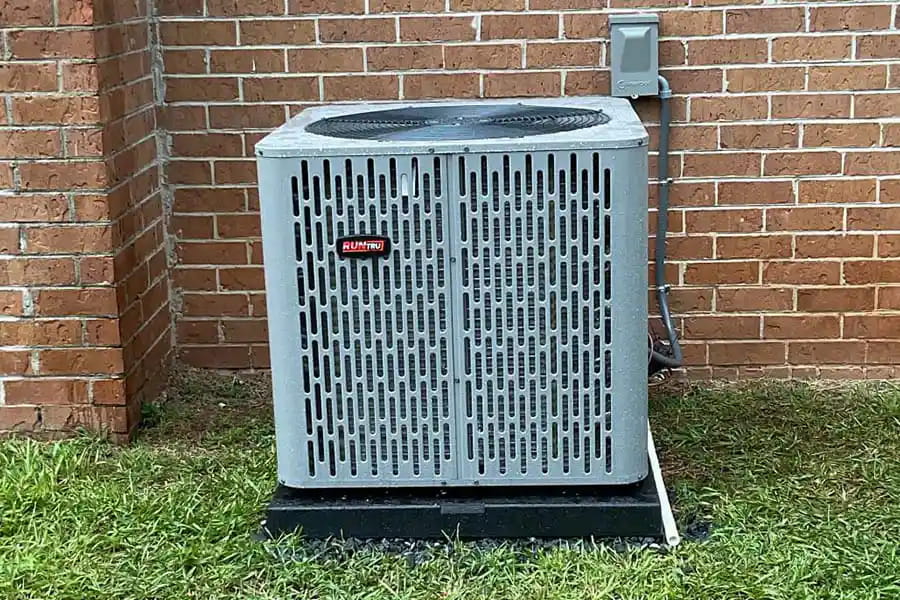
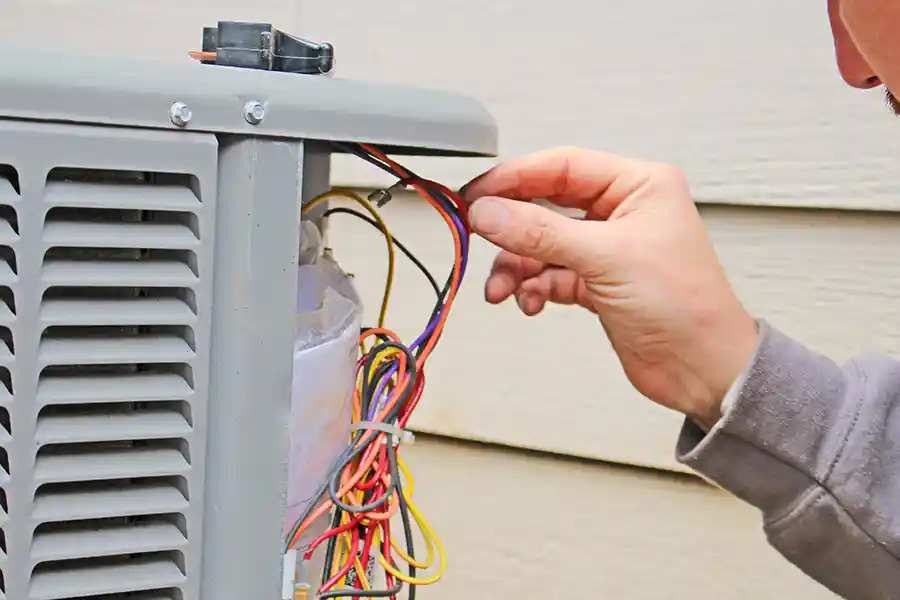
Norma called us on a Wednesday morning in mid-July. She lives on a wooded property in Tigerville in a home that had been in her family for years, surrounded by tall oaks and hickories that gave the house beautiful shade but also dropped debris constantly around the outdoor unit. Her system had been struggling to keep up for about a week and had finally stopped cooling the previous evening.
When our technician arrived, the outdoor unit was running but producing almost no cooling effect inside the home. The condenser coil was packed on three sides with a dense layer of leaf fragments, seed casings, and a season’s worth of pollen that had compacted against the fins. Airflow through the coil was almost entirely blocked, and the compressor had been cycling on its thermal protection to avoid overheating. We shut the system down, carefully cleaned the coil using the correct process for the fin spacing, and allowed pressures to normalize before restarting. Once running, we also flushed the condensate drain line, which was beginning to show early signs of algae buildup. Norma mentioned she had no idea the outdoor unit needed that kind of attention. In a wooded setting like hers, it needs it every year without fail. The system was back to cooling properly within a couple of hours, and Norma said it was running better than it had all season.
Rural communities like Tigerville deserve the same quality of service that larger cities receive, and that is exactly the standard we apply when we come out here. Distance from the main corridors does not change how thoroughly we work or how honestly we communicate.
Tigerville is the kind of community we are glad to serve, and we take that responsibility seriously every time we make the drive out here.
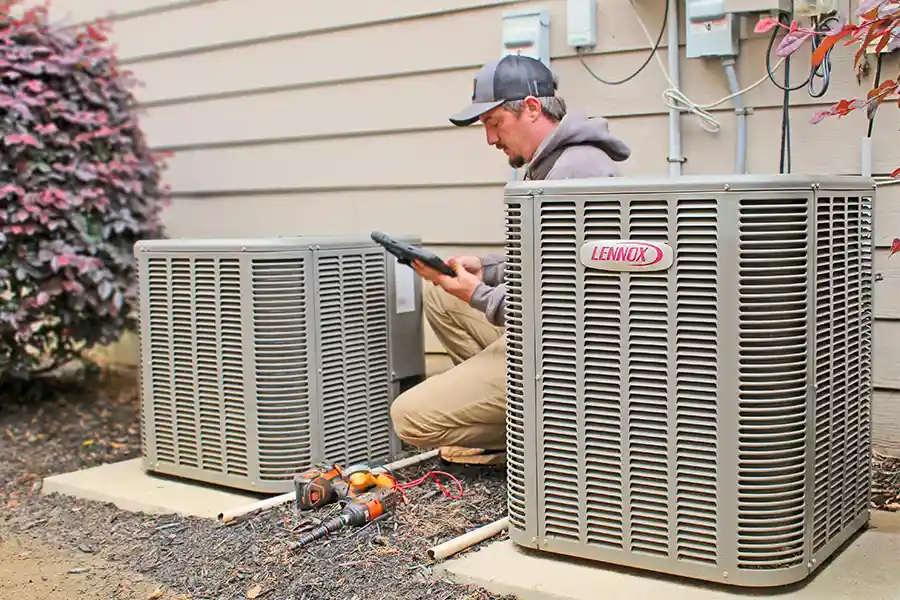
Yes. We serve the full Tigerville area including properties on rural routes and wooded lots throughout northern Greenville County. Being off the main road does not affect our commitment to getting there on time or to the quality of work we perform once we arrive.
The foothills environment brings higher ambient humidity, more frequent overnight moisture, and heavier organic debris from the surrounding forest canopy. These conditions accelerate condensate drain line buildup, promote coil fouling from pollen and leaf debris, and keep systems working harder to manage moisture than they would in lower-elevation or more urban environments. Annual maintenance is especially important for homes in this area.
At least once a year, in the spring before cooling season begins. In a heavily wooded setting like many Tigerville properties, debris accumulates against the condenser coil faster than most homeowners expect. A coil that cannot release heat efficiently forces the compressor to work harder and shortens the lifespan of the system. Some properties with particularly heavy tree coverage benefit from a mid-season check as well.
Unexpected shutdowns are most commonly caused by a safety float switch triggered by a backed-up condensate drain line, a high-pressure lockout from restricted condenser airflow, or a thermal overload on the compressor. Each of these is the system protecting itself from damage rather than a random malfunction. A technician can identify which safety condition was triggered and correct the underlying cause.
Yes, and in some ways it matters more here than in more urban settings. The combination of forested surroundings, elevated humidity, and mountain moisture patterns creates conditions that wear on specific system components faster than average. Condensate drain lines, condenser coils, and capacitors all benefit from the attention that a spring tune-up provides. Skipping a year in this environment is when the problems that turn into mid-summer emergencies tend to develop.