

Greenville is one of the most diverse housing markets in the entire Southeast, with neighborhoods ranging from century-old bungalows in the North Main historic district to brand-new construction in rapidly expanding corridors like Augusta Road and Wade Hampton. The HVAC systems serving those homes are just as varied, and diagnosing them correctly requires experience with all of it. Home Service Nerds HVAC, AC & Furnace Repair brings that experience to every call in this city.
Our repair services cover central air conditioning systems, heat pumps, mini-split systems, and air handlers across the full range of Greenville’s residential landscape. We work on the components that fail most often under the sustained demands of an Upstate summer: capacitors, contactors, blower motors, evaporator coils, condensate drain systems, and refrigerant lines. Most repairs are completed in a single visit because we arrive stocked with the parts most commonly needed.
Before any repair begins, we run a complete diagnostic and walk you through exactly what we found. You get a clear explanation and a firm price before we do anything. That standard does not change whether we are working in a historic home off Augusta Road or a newer build in the Verdae area.
Greenville summers are long, and the city’s mix of urban heat and piedmont humidity means cooling systems here earn every hour they run. Knowing when to call for help can make the difference between a simple repair and a full breakdown. Watch for these warning signs:
In a city as active as Greenville, a failing AC is not something to work around. These signs point to real problems that get worse the longer they go without attention.
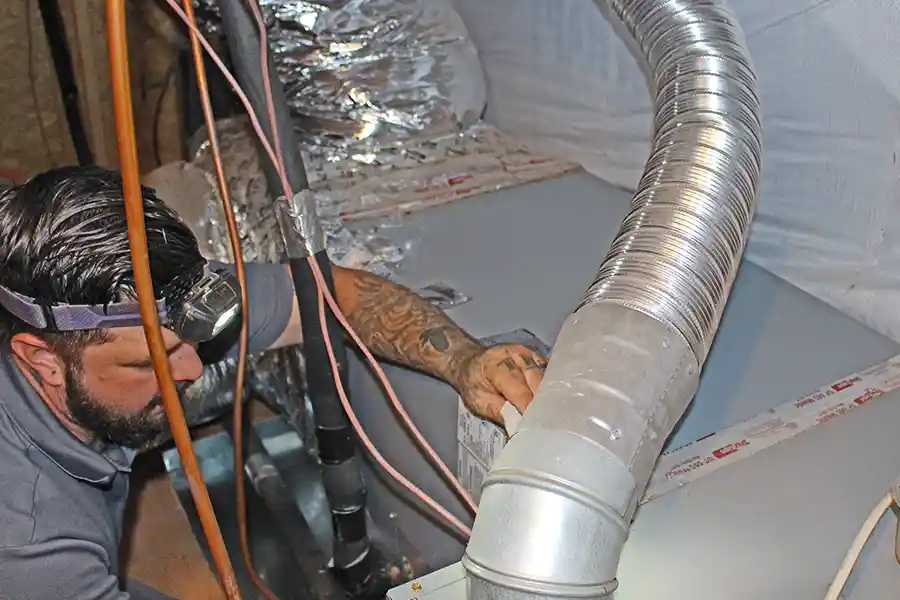
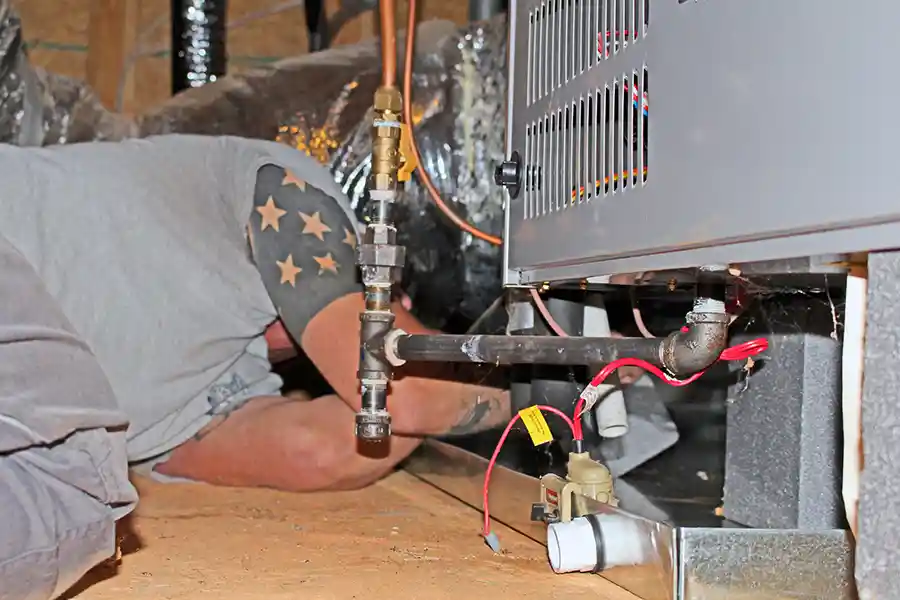
No city in the Upstate presents a wider range of HVAC challenges than Greenville. The historic neighborhoods closest to downtown, including Augusta Road, North Main, and the West End, are filled with homes built between 1900 and 1960 that were designed without mechanical cooling. When central air was added to these homes over subsequent decades, it was often retrofitted into attic and crawl space configurations that required creative compromises. Those compromises, layered over multiple system generations, create conditions that require a technician who can read the history of a home as much as the equipment itself.
Moving outward from downtown, the mid-century ranch homes that dominate neighborhoods like Nicholtown and Berea present their own challenges. Many of these homes have original ductwork that was sized for smaller cooling loads and has never been updated despite additions, renovations, and changes in how the space is used. Attic duct runs in these homes have been exposed to decades of Greenville summers, and the insulation and sealant on those systems has degraded in ways that quietly drain performance year after year.
The urban heat island effect is a genuine factor for homes in denser Greenville neighborhoods. Streets, parking lots, and commercial rooftops surrounding residential areas retain heat well into the evening, raising the baseline temperature that home cooling systems have to work against. A system that performs adequately in a suburban setting with green space and tree cover may struggle noticeably when surrounded by the thermal mass of an urban environment, even if the equipment itself is in good condition.
James called us in late June from his home in the North Main neighborhood of Greenville. The house was a 1940s craftsman that had been in his family for decades, and he said the second floor had never been comfortable in the summer. The system ran constantly and the upstairs bedrooms still felt like a different climate than the ground floor. Two previous HVAC companies had looked at the system over the years and both had told him the house just ran that way.
We spent time in the attic tracing every duct run. What we found was three generations of ductwork: original metal trunk lines from the 1970s installation, a round of flex duct additions from what appeared to be the early 1990s, and a more recent repair section using a different diameter that created a restriction at the transition point. Several joints throughout the system were sealed with dried and cracked duct tape that was holding on by habit more than adhesion. The second floor was receiving a fraction of the airflow the system was producing.
We rebuilt the transition point, resealed every compromised joint with mastic, and rebalanced the system by adjusting dampers on the first floor runs to redirect more airflow upstairs. James said it was the first summer in memory that the upstairs bedrooms were genuinely comfortable. The equipment was fine. Thirty years of patchwork was the problem.
We did not tell him what he wanted to hear. We told him what we found and fixed what needed fixing. That is all we ever do.
Greenville has no shortage of HVAC companies. What it has a shortage of is companies willing to do the diagnostic work that older and more complex homes actually require. We are a veteran-owned, family-operated team that built our reputation in this city by doing the hard work honestly and explaining what we found clearly.
Here is what Greenville homeowners get when they call Home Service Nerds:
Greenville deserves better than a company that shows up, glances at the equipment, and recommends a replacement. We are here to find the real answer and fix it right.
Home Service Nerds HVAC, AC & Furnace Repair is proud to serve Greenville homeowners across every neighborhood in the city. Whether your home is a historic craftsman near downtown, a mid-century ranch in an established neighborhood, or a newer build on the city’s growing edges, we have the experience to diagnose it correctly and repair it right. Call us today to schedule service or ask about same-day and emergency availability throughout Greenville.
The clearest signs are uneven cooling between floors or rooms, a system that runs constantly without reaching the set temperature, and energy bills that seem high relative to how comfortable the house actually feels. In historic Greenville neighborhoods where ductwork has been modified across multiple decades, air loss through failed joints and undersized transitions is one of the most common and most overlooked performance problems we find. A duct inspection is often the most valuable diagnostic step we can take in these homes.
It does, in a measurable way. Homes in denser Greenville neighborhoods are surrounded by pavement, rooftops, and commercial buildings that absorb and radiate heat well into the night. That raises the baseline outdoor temperature your system has to work against compared to homes in greener suburban settings. A system that is already working near its capacity will feel that difference on the hottest days of the year. It is one reason why proper sizing and maintenance matter more in urban environments than many homeowners realize.
Homes with layered HVAC histories are worth having evaluated as a complete system. Mismatched components, duct transitions between different generations of equipment, and sealants that have long since failed can combine to create a system that runs hard but delivers poor results. We assess the full picture from air handler to register and give you an honest account of where the system is losing performance and what it would take to address it.
In many cases, yes. Historic homes with limited attic or crawl space access, additions that were never connected to the main duct system, and rooms with unusual heat loads are all situations where a mini-split can solve a comfort problem that a central system cannot easily reach. We can assess whether a mini-split makes sense for your specific situation and give you a realistic picture of what it would involve.
Yes. We provide emergency and same-day AC repair service throughout Greenville, including the historic neighborhoods near downtown, mid-city areas, and the newer corridors on the city’s edges. A cooling failure in a Greenville summer is urgent regardless of which neighborhood you are in. Call us any time and we will get a technician to your home as quickly as possible, including evenings and weekends.
Don’t see your city? Give us a call.